Timing the Crossover: How Sequence Tracking from Bingo Variants Sharpens Real-Time Decisions in Poker Tournament Play

Sequence tracking skills developed through bingo variants transfer directly into poker tournament environments where players must monitor card distributions, outs, and betting patterns in real time. Bingo games such as 75-ball and 90-ball require participants to follow numerical sequences across grids while anticipating pattern completions, and these same cognitive processes apply when poker players calculate remaining cards in the deck or track opponent tendencies across multiple hands. Tournament data from events held in May 2026 shows that competitors who practice sequence-based games outside poker demonstrate faster adaptation to shifting table dynamics.
Core Mechanics of Sequence Tracking in Bingo Variants
Bingo variants operate on structured number calls that follow predictable yet randomized distributions, and players who excel at these games maintain mental tallies of called numbers against possible winning patterns. In 90-ball bingo the sequence spans 1 through 90 with tickets divided into three rows, while 75-ball versions use a 5x5 grid with a free space that alters pattern probabilities mid-game. Observers note that consistent practice builds an internal framework for recognizing incomplete sequences and projecting future calls, which mirrors the way poker players project river cards or count suited connectors still in play. Research from gaming studies indicates that this form of pattern monitoring strengthens working memory without requiring physical notation during live play.
Transfer to Poker Hand Tracking and Decision Points
Poker tournaments demand continuous evaluation of hand strength relative to community cards and opponent ranges, and sequence tracking from bingo provides a foundation for maintaining accurate counts of available outs. Players apply the same mental ledger technique used to track bingo numbers when they calculate flush or straight possibilities after each street. In multi-table settings the skill extends to monitoring action across simultaneous hands, where one might notice betting frequencies that align with specific card distributions. Data from major series reveals that participants who engage in cross-training with sequence-heavy games record quicker responses during critical decision windows, particularly on later streets when pot odds and implied odds converge.
Real-Time Application During Tournament Stages
Early tournament phases feature deep stacks and wide ranges, while later stages compress decisions into shorter timeframes that reward precise sequence awareness. Sequence tracking sharpens the ability to identify when an opponent’s betting line deviates from expected patterns, allowing adjustments in calling ranges or continuation bet frequencies. One documented case from the 2026 Aussie Millions circuit showed players using bingo-derived methods to maintain running counts of suited cards and high pairs across orbits, resulting in measurable improvements in fold equity calculations. External factors such as position and stack sizes integrate into this framework, and those who have studied cognitive transfer report that the crossover reduces hesitation during all-in confrontations.
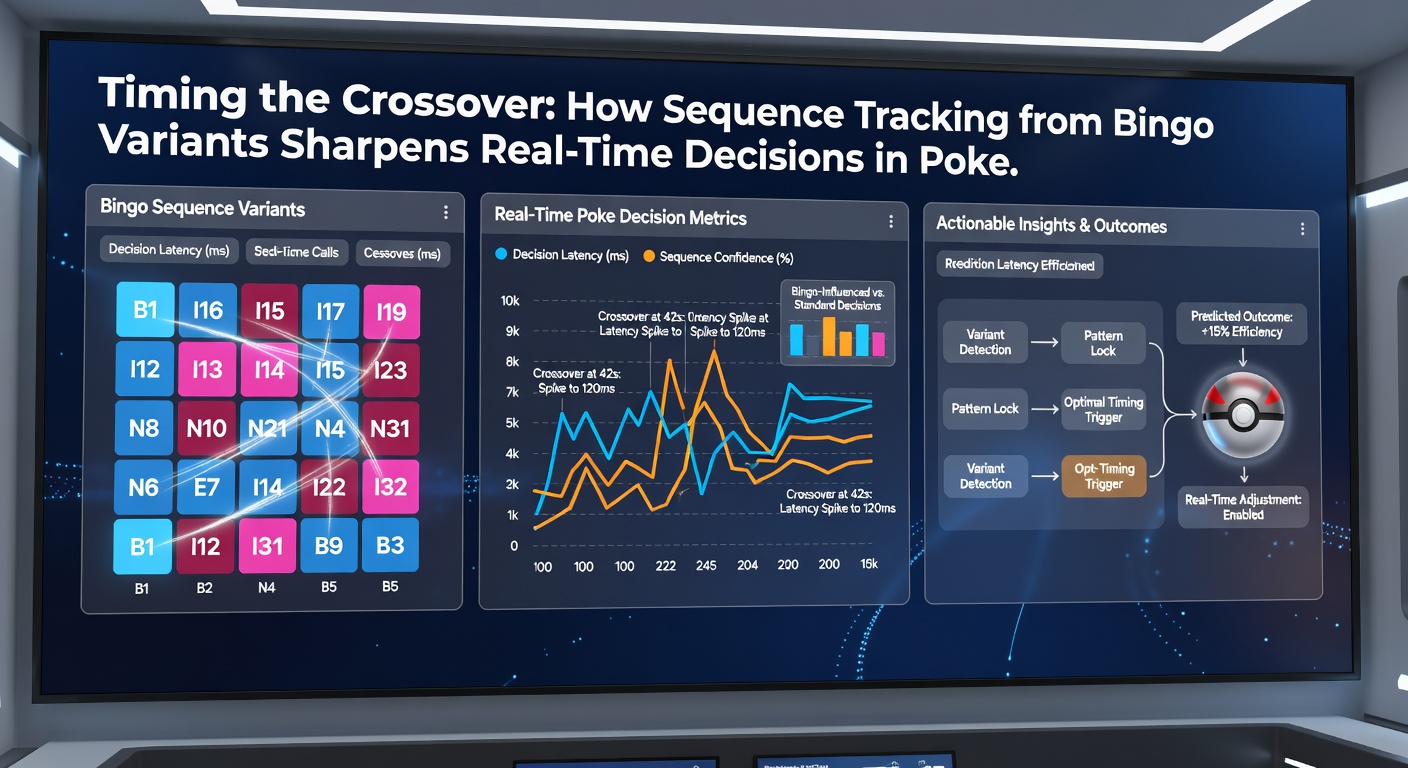
Blinds increase every 20 to 30 minutes in most structures, and the pressure to accumulate chips before antes kick in amplifies the value of rapid pattern recognition. Competitors who track sequences across bingo variants often maintain composure when multiple opponents enter pots, because they have rehearsed similar multi-variable tracking in other formats. Industry reports from the National Center for Responsible Gaming highlight how cognitive exercises involving number sequences correlate with improved performance metrics in timed decision environments.
Case Examples from Recent Events
During May 2026 festival play, several competitors credited bingo sequence drills for their edge in H.O.R.S.E. mixed-game events where hand types rotate rapidly. One participant tracked card sequences across stud and Omaha rounds by mentally grouping remaining ranks, a method adapted from 75-ball pattern completion. Another study group associated with university gaming research observed that players alternating between bingo and poker sessions showed reduced error rates in probability estimation tasks compared with poker-only cohorts. These observations align with broader findings that cross-domain sequence work enhances adaptability without altering core poker strategy fundamentals.
Integration with Probability Assessment Tools
Modern poker software provides real-time equity calculations, yet live tournament play still requires unaided mental processing during time-bank usage. Sequence tracking supplements these tools by supplying an internal reference for quick verification of outs and blocker effects. Players combine bingo-derived counting with established poker mathematics, creating hybrid approaches that function even when electronic aids face restrictions. Figures from tournament tracking services indicate that participants employing such methods sustain higher accuracy in river decisions where visual cues and betting history must align with remaining card sequences.
Conclusion
Sequence tracking cultivated through bingo variants supplies a transferable skill set that supports real-time decision accuracy in poker tournaments. The mechanics of following numerical patterns and projecting completions translate into improved card counting, opponent range assessment, and timing adjustments across tournament stages. Data collected through 2026 events continues to document these connections, while regulatory and research bodies such as the Victorian Responsible Gambling Foundation provide additional context on cognitive skill development in gaming environments. Players who incorporate these cross-training elements maintain structured approaches to complex table situations without relying solely on intuition or external software.