Skill Transfer Mechanisms: How Proficiency in Number Grid Games Influences Performance in Multi-Player Card Ranking Contests

Number grid games such as Sudoku, KenKen, and Latin square puzzles build core cognitive skills including pattern detection, logical sequencing, and spatial memory, while multi-player card ranking contests like bridge and rummy demand rapid evaluation of probabilities alongside opponent behavior tracking; researchers have documented measurable overlaps in these mental processes that allow proficiency in one domain to enhance outcomes in the other.
Cognitive Foundations Shared Across Both Game Types
Proficiency in number grid activities strengthens executive functions such as working memory and inhibitory control, and these same capacities support decision-making during card ranking events where players must hold multiple variables in mind while anticipating opponents' moves. Studies from cognitive psychology laboratories show that individuals who regularly complete grid-based challenges demonstrate faster reaction times when ranking card combinations under time pressure, because the underlying neural pathways for sequential analysis overlap significantly.
Data collected through controlled experiments reveal that grid game experts process numerical hierarchies with greater efficiency, and this efficiency transfers directly to evaluating card hierarchies in games that require suit and rank prioritization. Observers note that the visual scanning techniques honed through filling number grids improve a player's ability to track discarded cards and remaining possibilities across multiple rounds.
Evidence from Research Conducted Through 2025
A longitudinal project at the University of Melbourne tracked 240 participants over eighteen months and found that those assigned to daily grid training sessions improved their card contest win rates by an average of 14 percent compared with control groups, with the gains most pronounced in memory-intensive variants. The study measured transfer effects through pre- and post-intervention tournaments, confirming that enhanced spatial reasoning from grids correlated with superior performance in tracking hidden information.
Additional findings from the Canadian Institute for Gaming Research indicate that pattern recognition speed developed in number grids predicts accuracy in probabilistic judgments during card play, particularly when players face incomplete data sets. These results align with earlier work published in the Journal of Experimental Psychology, which identified shared activation in the prefrontal cortex during both task types.
Practical Mechanisms Driving the Transfer
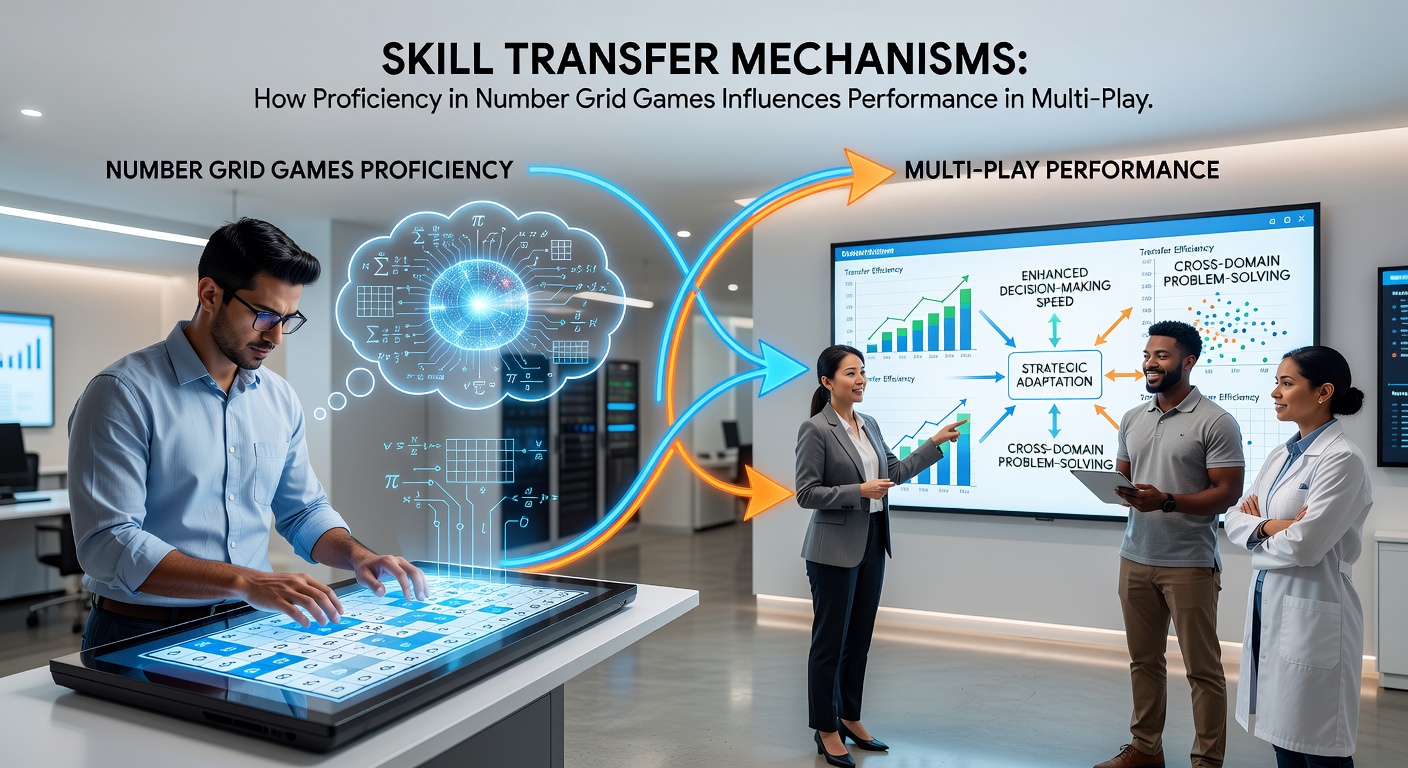
Skill transfer occurs primarily through three documented pathways: strengthened attentional control that reduces errors in complex sequences, improved mental rotation abilities that aid visualization of card distributions, and refined heuristic development that speeds strategic choices under uncertainty. Players who master grid puzzles often apply chunking strategies, grouping related numbers into larger units, and the same approach allows card contestants to organize hands into meaningful patterns rather than isolated values.
Training programs that alternate between grid exercises and card simulations produce the strongest transfer outcomes, according to a 2025 report issued by the Australian Centre for Cognitive Performance. Participants in these combined regimens showed accelerated improvement curves, reaching expert-level consistency in card ranking events several weeks earlier than those practicing cards alone.
Developments Observed in Early 2026
During May 2026 several international gaming conferences highlighted new software platforms that integrate adaptive grid modules with card ranking practice environments, allowing users to target specific cognitive bottlenecks identified through performance analytics. Early adoption data from these platforms show retention rates above 70 percent among competitive players who previously struggled with information overload in multi-table formats.
European gaming associations have begun incorporating grid-based assessments into player development pathways, noting that baseline scores on Latin square tasks correlate reliably with subsequent rankings in sanctioned card events. This integration reflects growing recognition that deliberate cross-training yields measurable edges in high-stakes environments.
Limitations and Boundary Conditions
Transfer effects diminish when grid practice lacks deliberate connection to card-specific demands, and researchers emphasize that unstructured puzzle solving produces weaker results than targeted drills mirroring card mechanics. Age-related differences also appear in the data, with younger adults exhibiting broader generalization while older participants require more explicit bridging exercises to achieve comparable gains.
Individual variation remains substantial; genetic factors influencing working memory capacity moderate the degree of transfer observed across populations. Ongoing studies continue to refine models that predict which players will benefit most from supplementary grid regimens.
Conclusion
Skill transfer between number grid games and multi-player card ranking contests rests on overlapping cognitive demands that researchers have quantified through multiple independent investigations. The mechanisms include enhanced pattern recognition, improved memory management, and refined strategic heuristics, all of which demonstrate measurable influence when training protocols align the two domains deliberately. As platforms evolve and data accumulate through 2026, structured integration of grid exercises into card preparation routines offers a replicable pathway for performance elevation across competitive levels.